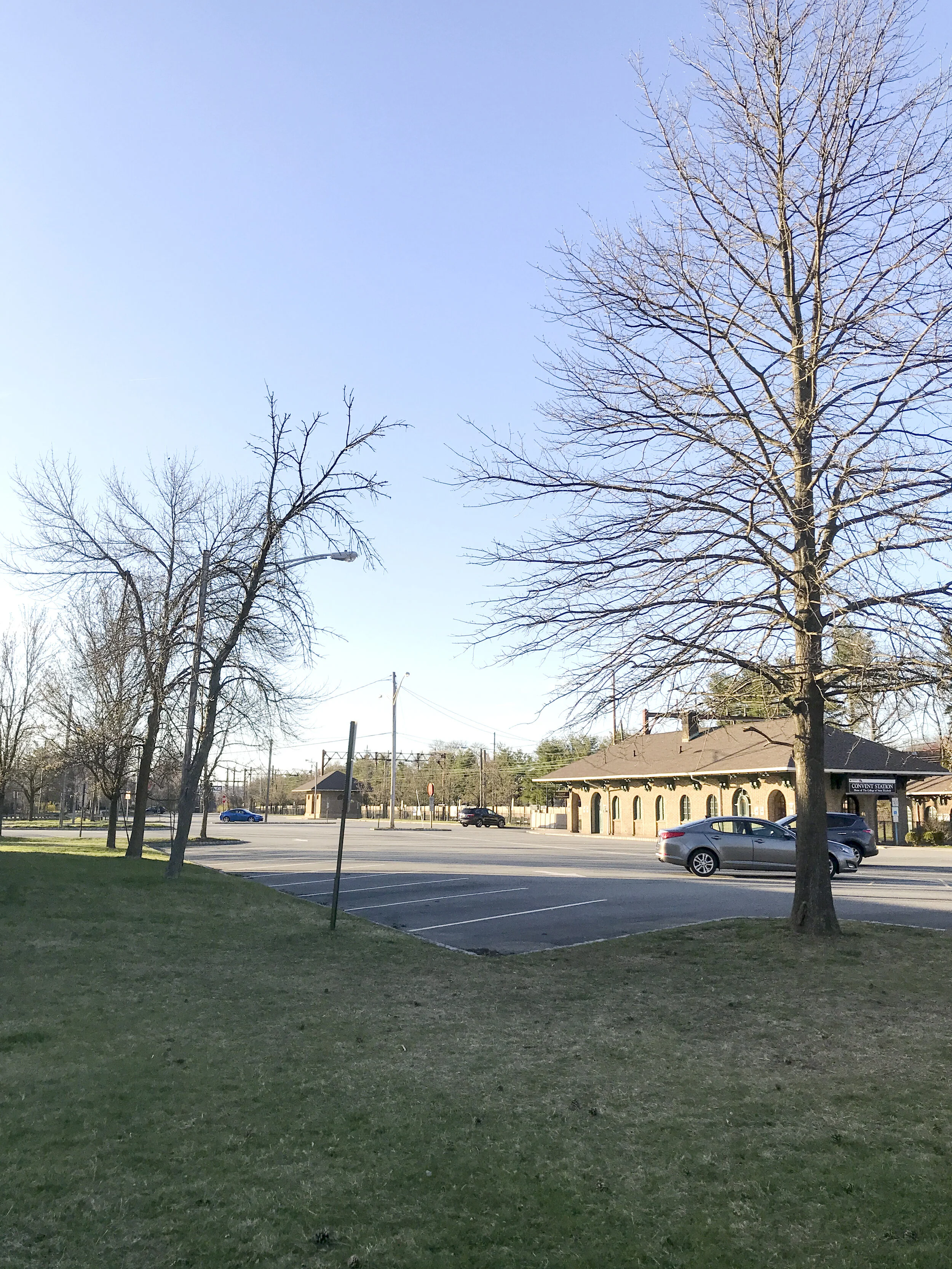
There is a certain stillness in the world. Parks are closed. Stores are closed. Streets are (relatively) barren. The emergency healthcare response and the government mandates to stay home have left normally lively places desolate. This is what the train station parking lot should look like on a Sunday morning, but this is what it looks like on a weekday afternoon. The few cars in the lot represent those few commuters who may be essential workers and are still needed in this time of crisis. This will not be the new world order; these measures are temporary, and the pandemic will dissipate. However, the deserted quality of normally bustling places provides a different perspective--one with limited human activity. It is almost as if one can more clearly see the cultural landscape without people as a distraction.
One changing perspective is the shifting use of buildings. The ticket office and waiting room building at the station appears as more of an outpost or folly in a sea of pavement than a nodal point of departure for masses of commuters headed to Manhattan. Its function has been largely eliminated. Homes have become lifelines for many people. Social media is replete with how people are using their spaces differently. Neighborhood social gatherings are held curbside from the minimum distance of six feet in a circle of lawn chairs. Those who can work remotely have found inventive ways to establish temporary offices at home. The mandated limited movement has forced people to do more with what they have. Necessity is the mother of invention.
Hopefully society’s values will continue shift towards resourcefulness as a result of this pandemic. Hopefully people will learn to conserve and cease wasteful behaviors. Hopefully there is some silver lining as a result of all this disruption.