Scatchard’s Mill
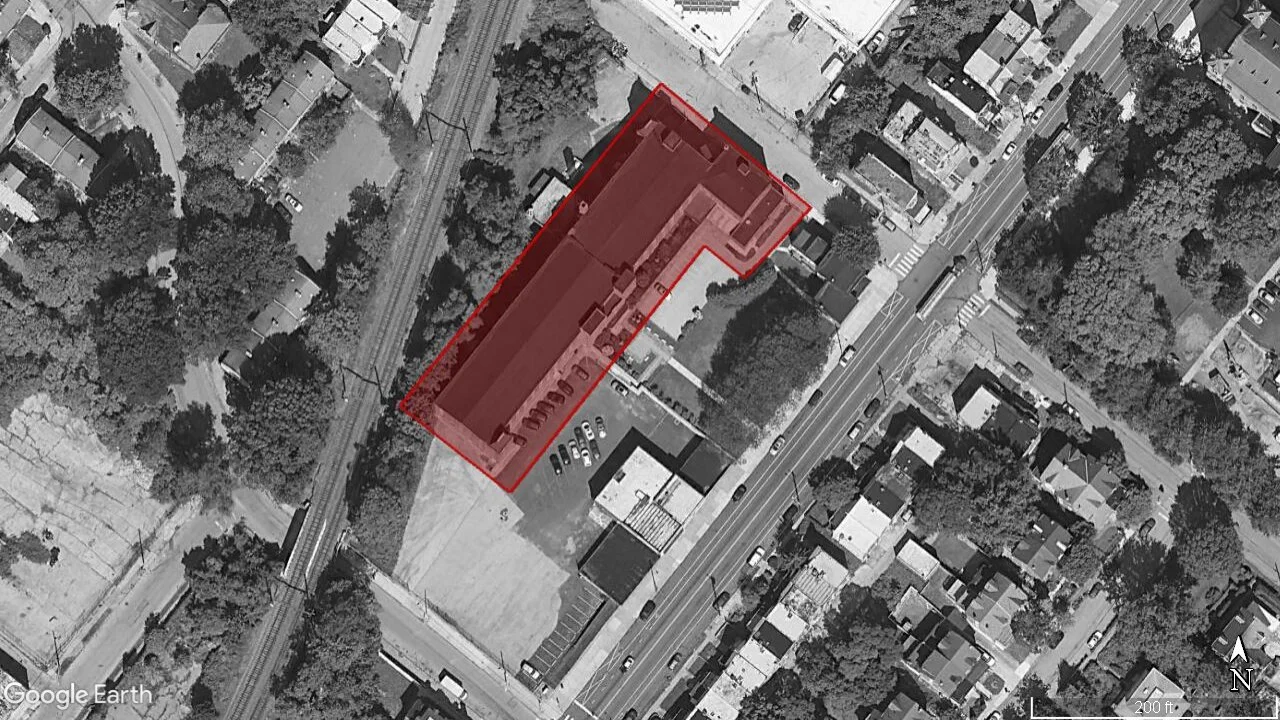
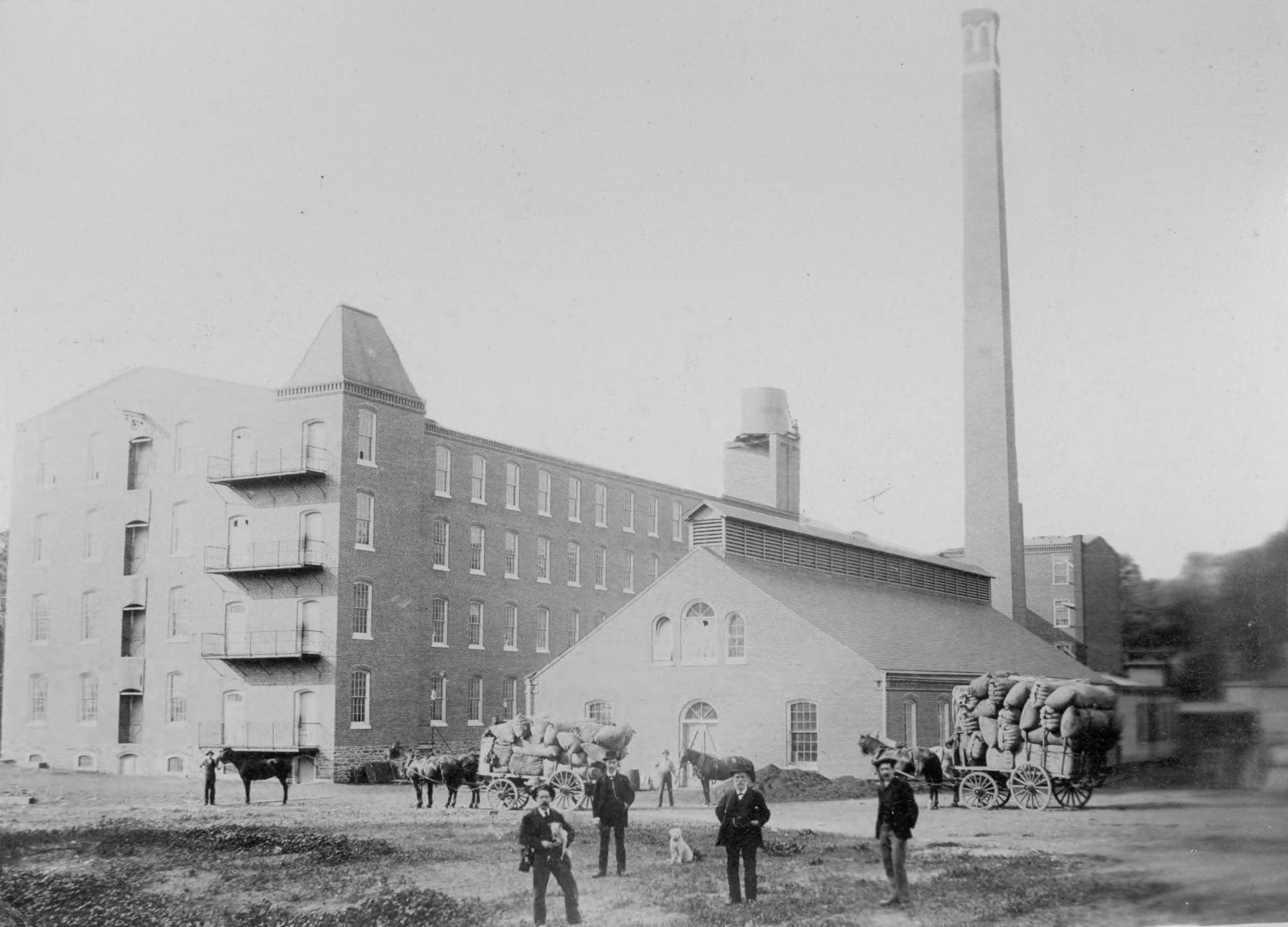
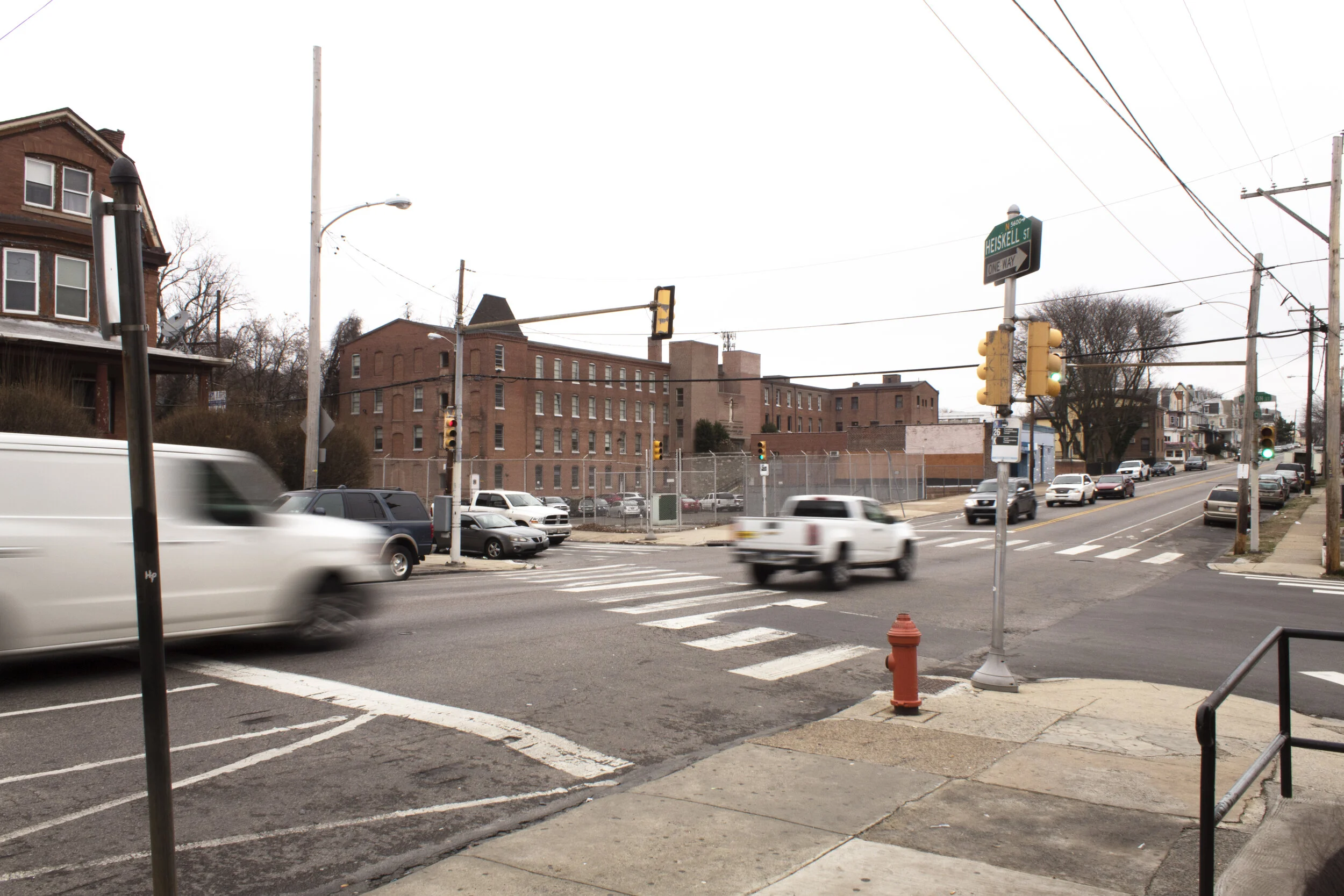
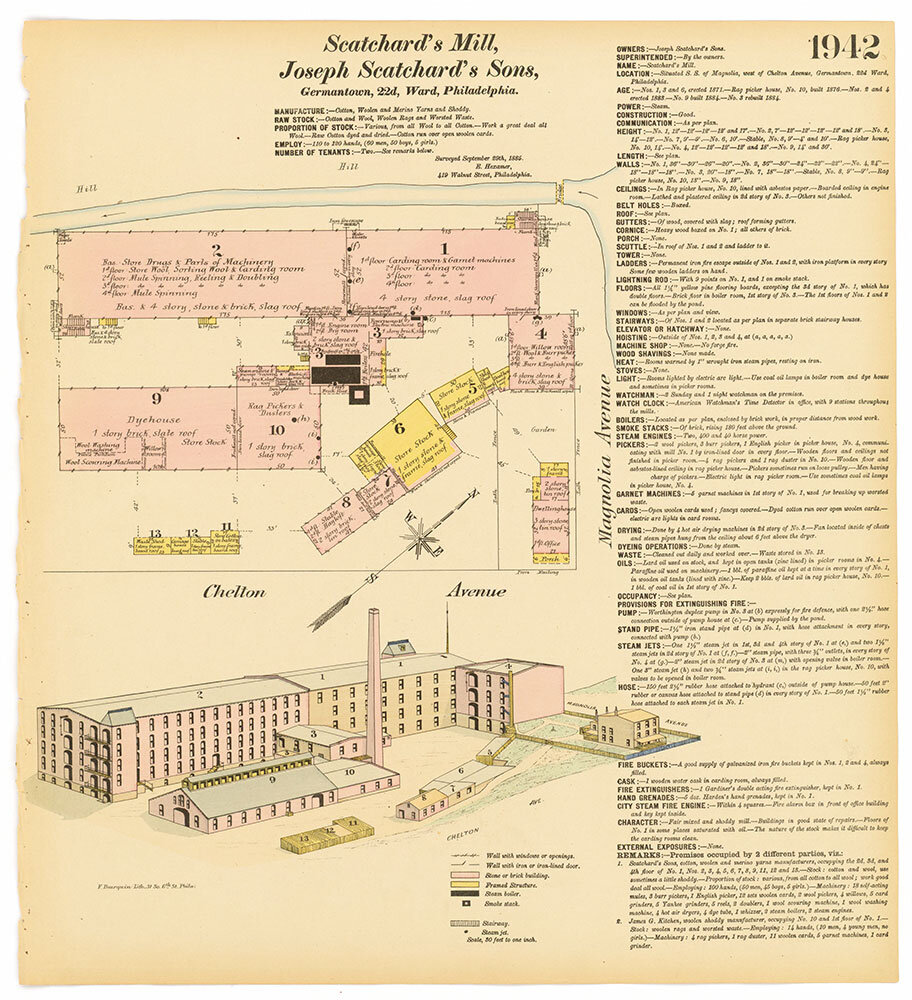
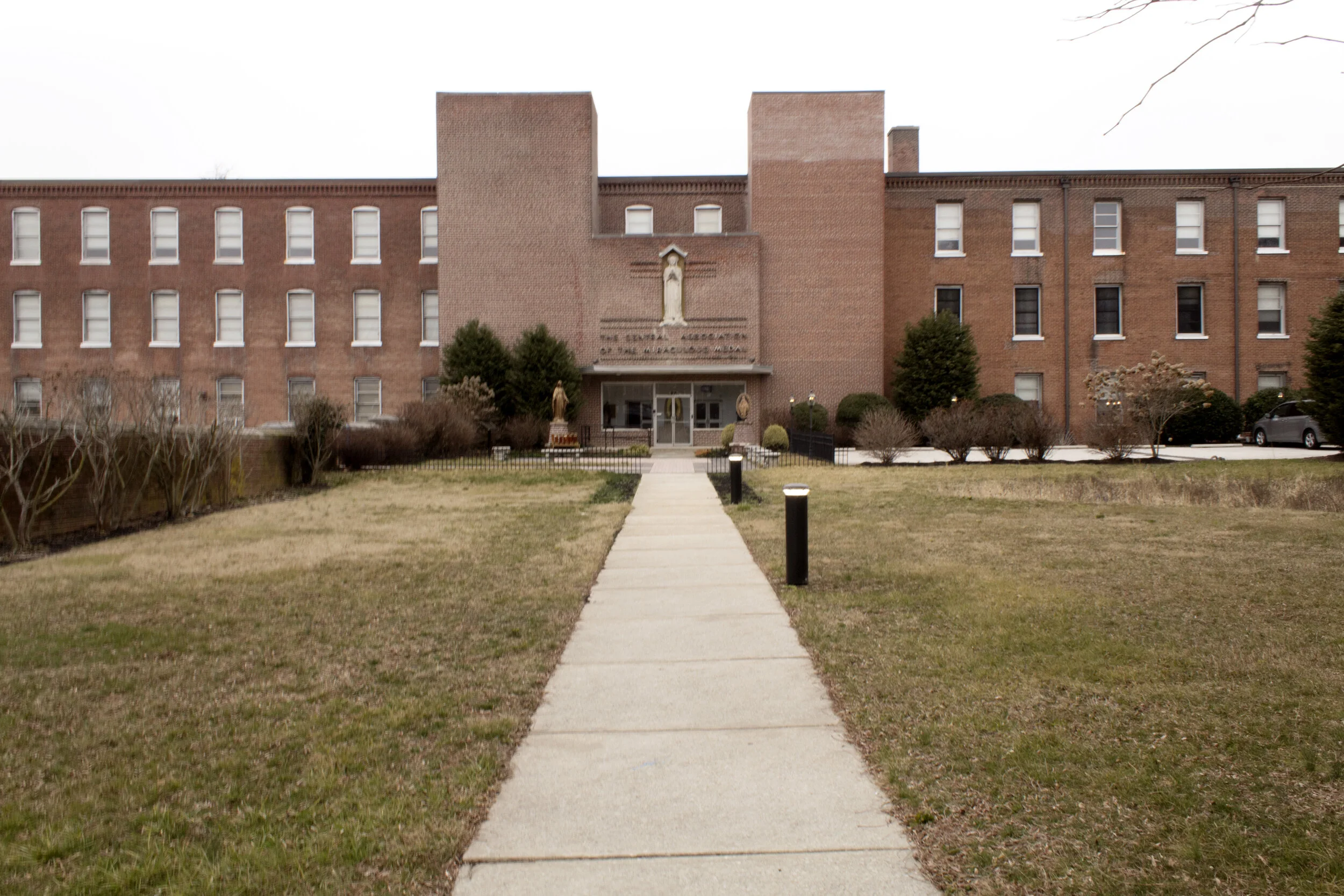
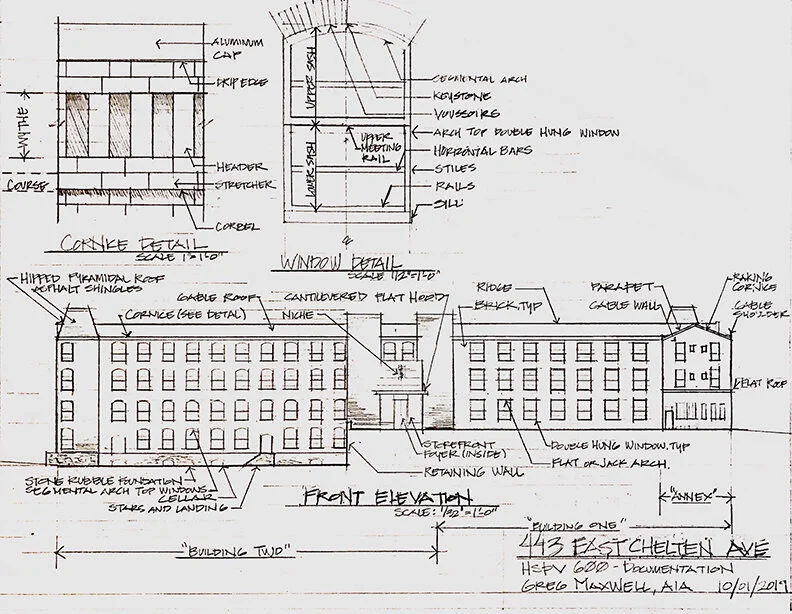
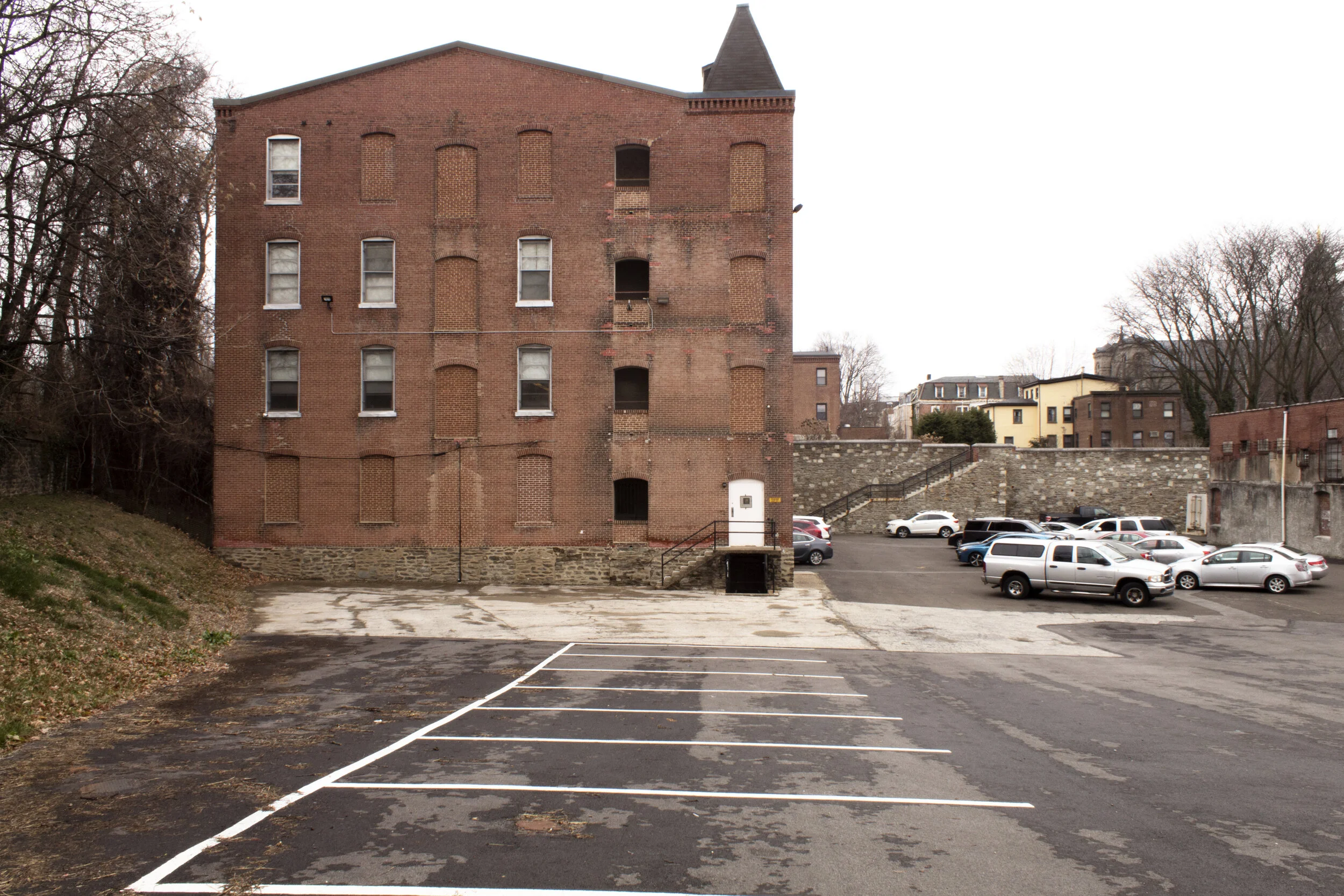
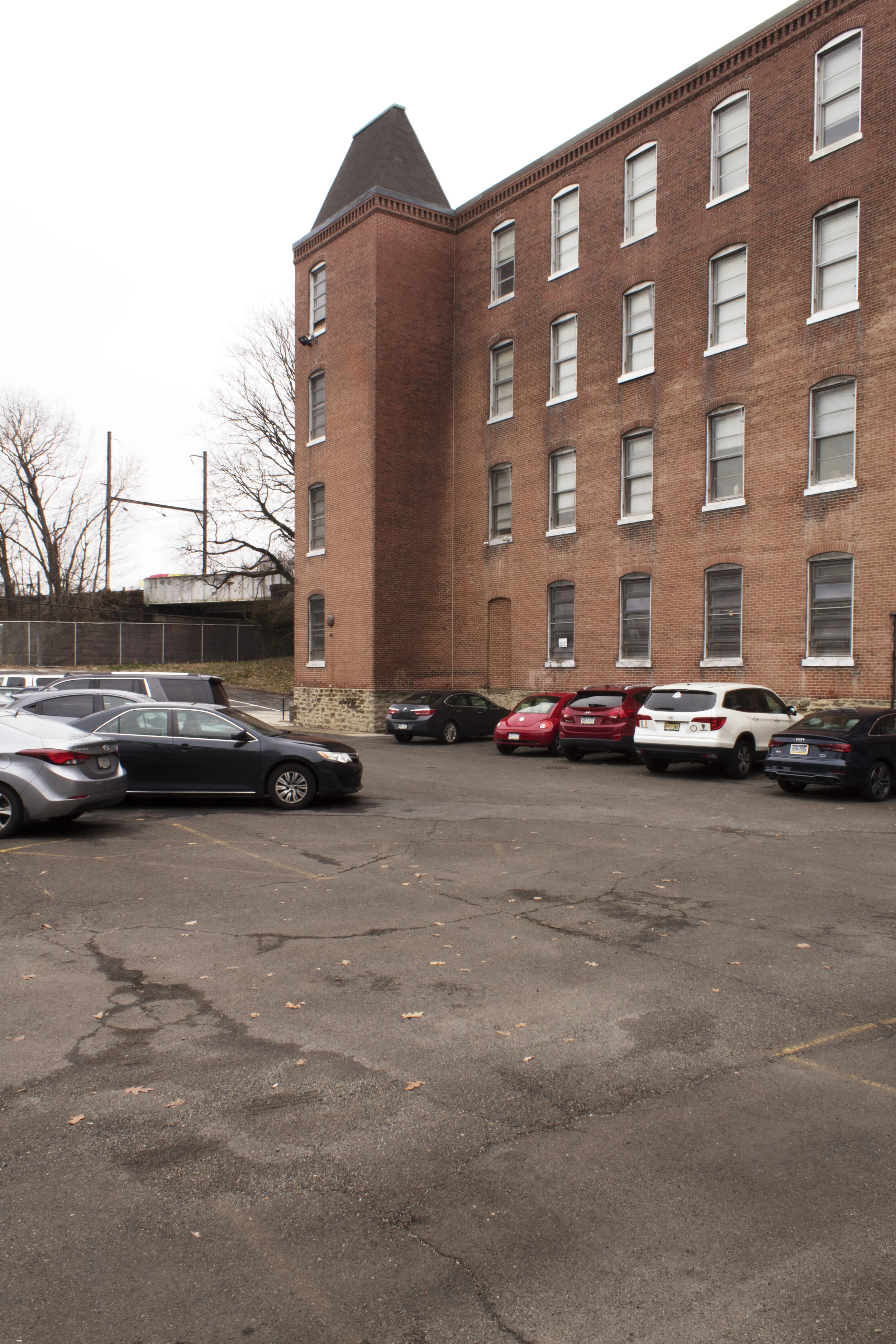
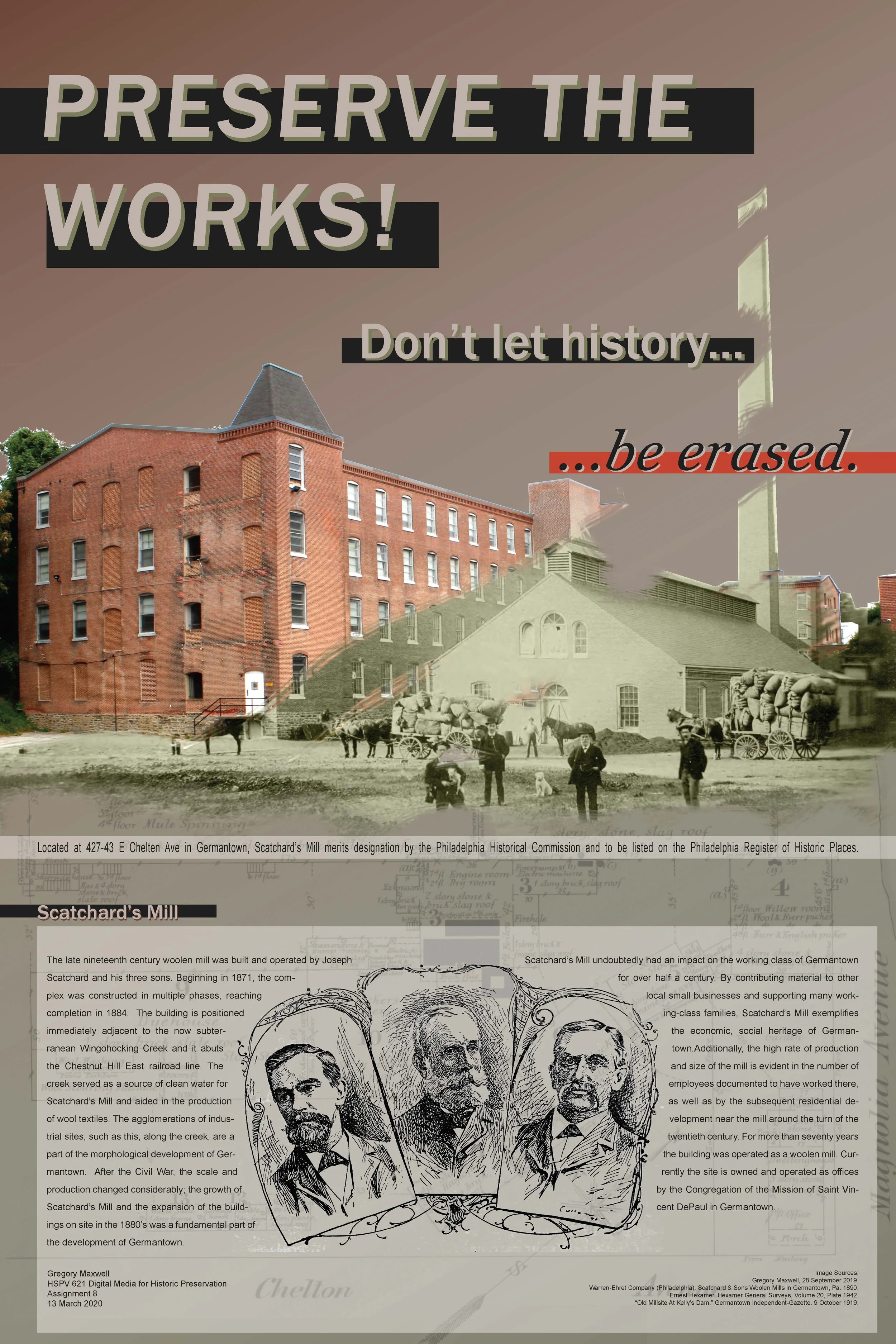
The late nineteenth century woolen mill was built and operated by Joseph Scatchard and his three sons. Beginning in 1871, the complex was constructed in multiple phases, reaching completion in 1884.[1] The building is positioned immediately adjacent to the now subterranean Wingohocking Creek and it abuts the Chestnut Hill East railroad line. The creek served as a source of clean water for Scatchard’s Mill and aided in the production of wool textiles. The agglomerations of industrial sites, such as this, along the creek, are a part of the morphological development of Germantown. Additionally, the high rate of production and size of the mill is evident in the number of employees documented to have worked there, as well as by the subsequent residential development near the mill around the turn of the twentieth century. For more than seventy years the building was operated as a woolen mill. Currently the site is owned and operated as offices by the Congregation of the Mission of Saint Vincent DePaul in Germantown.[2]
Textile manufacturing was one of Germantown’s first and most important industries.[3] As early as the 1690s, wool produced in Germantown was woven into stockings and transported to Philadelphia for sale. Germantown textile production greatly contributed to Philadelphia’s textile manufacturing prowess.[4] There had been a mill on this site since prior to 1815 suggesting that this was a suitable location for waterpower.[5] Like other places in the northeastern states, Germantown’s industrial sites propagated along the waterways.[6] The waterways provided the means for powering the mills, but also a source for cleaning the wool. After the Civil War, the scale and production changed considerably; the growth of Scatchard’s Mill and the expansion of the buildings on site in the 1880’s was a fundamental part of the development of Germantown.
Scatchard’s Mill, although it operated later in the history of Germantown, fits into the history of textile production in the area during a time of great economic vitality. Textile mills commonly fostered growth in villages by promoting development and supporting other businesses.[7] The Scatchards’ rented space to multiple tenants, specifically those who were involved in the production of wool goods. These smaller scale operations were Thurman Forster & Isles, Worsted Yarn Spinners and Robert Cardleg, Woolen Knitting Gloves Manufacturer.[8] Additionally, the mill seems to have had an influence on the residential development in the surrounding area. With well over one hundred people working on site, Scatchard’s Mill undoubtedly had an impact on the working class of Germantown for over half a century. By contributing material to other local small businesses and supporting many working-class families, Scatchard’s Mill exemplifies the economic, social heritage of Germantown.
Notes
[1] Ernest Hexamer, Hexamer General Surveys, Volume 20, Plate 1942, 1885
[2] Deed, Pierson to Congregation of the Mission of St. Vincent De Paul in Germantown, 23 June 1949, Philadelphia Pennsylvania, Deed Book C.J.P. 2380 Page 177, Philadelphia City Archives.
[3] J.M. Duffin, Acta Germanopolis: Records of the Corporation of Germantown Pennsylvania 1691-1707, (Philadelphia, PA: Colonial Society of Pennsylvania, 2008), xv.
[4] Nancy A. Holst, “Pattern Books and the Suburbanization of Germantown, Pennsylvania in the Mid-Nineteenth Century,” (Doctoral dissertation, the University of Delaware, 2008), 6.
[5] Deed, Bayard to Kelly, 18 August 1815, Philadelphia, Pennsylvania, Deed Book M.R. 6, Page 331, Philadelphia City Archives.
[6] Betsy Hunter Bradley, The Works: The Industrial Architecture of the United States, (New York: Oxford University Press, 1999), 56-57
[7] Bradley, 57-58.
[8] Ernest Hexamer, Hexamer General Surveys, Volume 8, Plate 692, 1873.